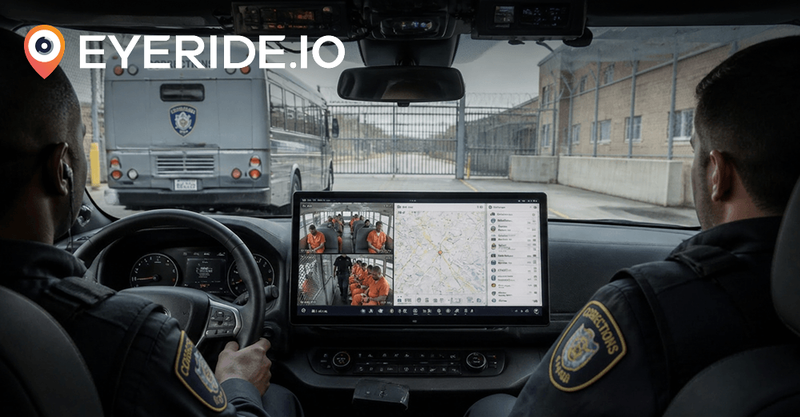
How Modern Fleet Management Tech Upgrades Prisoner Transit From High-Risk To High-Security
In corrections, the best technology isn't the one with the most features—it's the one officers trust when every second matters.
Transporting inmates isn't like managing a standard fleet.
Every trip carries responsibility.
Every route carries risk.
Every incident can have legal, operational, and public safety consequences.
Choosing a fleet management system may begin as a technical decision...
but for correctional agencies, it quickly becomes an operational one.
Technology Should Support Officers - Not Slow Them Down
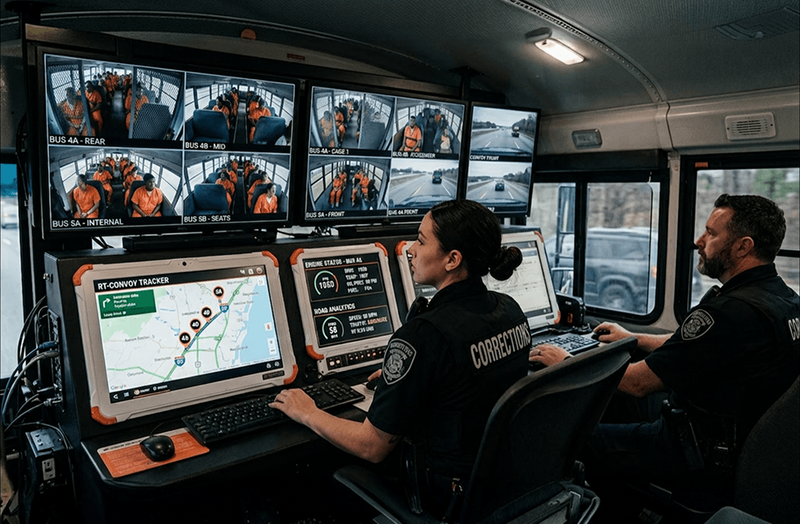
Correctional officers already manage enough.
Secure transport procedures.
Route planning.
Communication with dispatch.
Prisoner accountability.
Traffic.
Unexpected situations.
The last thing they need is technology that takes longer to understand than the situation itself.
A platform may offer dozens of features.
But if officers can't access critical information quickly...
those features provide little value when it matters most.
Information Is Only Valuable If You Can Use It
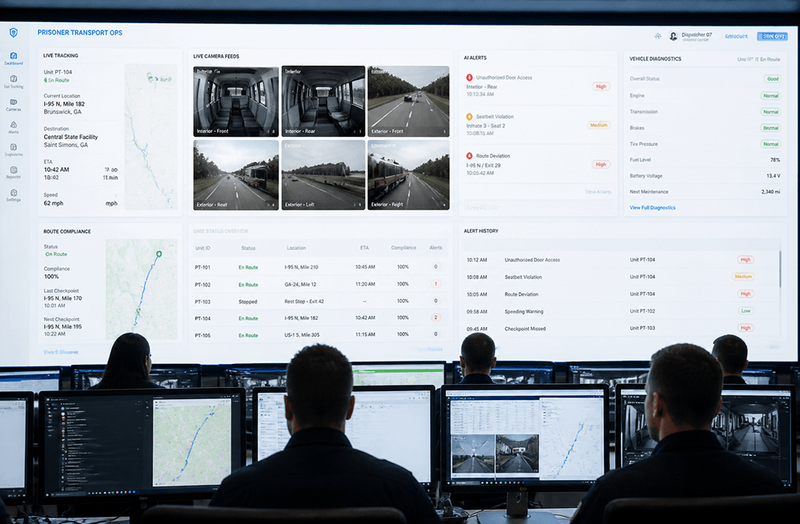
Modern prisoner transport vehicles generate enormous amounts of information.
GPS locations.
Vehicle diagnostics.
AI safety alerts.
360° camera footage.
Driver behavior.
Route history.
Dispatch communications.
The question isn't whether the data exists.
The question is whether officers and supervisors can access it in seconds.
Because during an active transport...
time matters.
The Questions That Matter Most
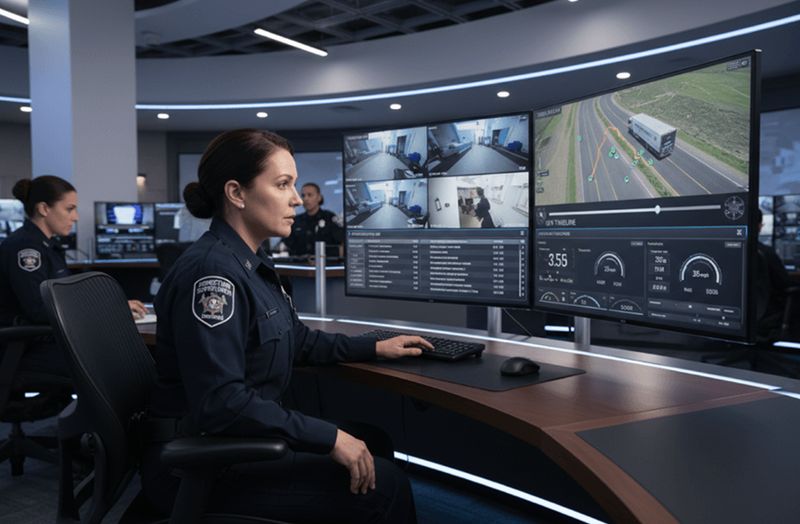
When evaluating a prisoner transport system, the most important questions often aren't found on a feature comparison sheet.
Can command staff immediately understand what happened?
Can officers quickly review footage without searching through multiple systems?
Can dispatch receive meaningful alerts instead of constant notifications?
Can incidents be reconstructed using facts instead of assumptions?
Those answers determine whether technology becomes part of daily operations...
or only gets opened after something goes wrong.
Why Usability Protects More Than Productivity
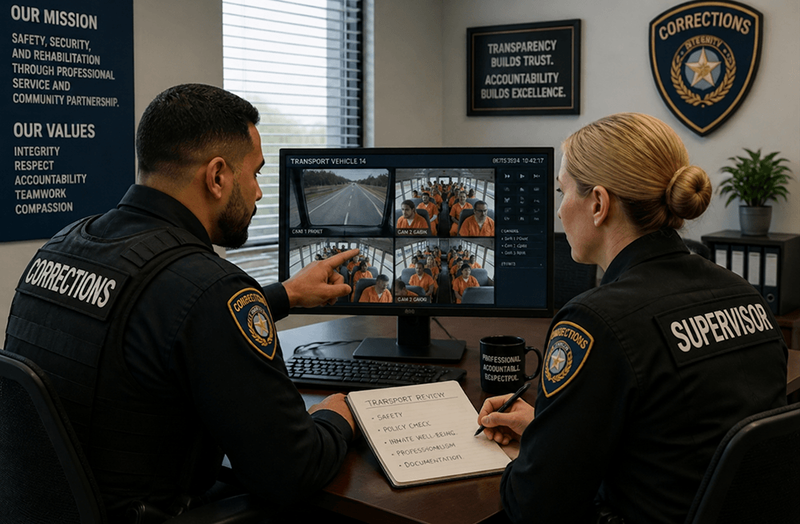
WIn corrections, usability affects much more than efficiency.
It protects:
- officer accountability
- inmate safety
- departmental transparency
- legal defensibility
- public confidence
When information is difficult to retrieve...
reports take longer.
Investigations become harder.
Questions remain unanswered.
When information is immediate...
decisions become factual.
Not emotional.
Where EYERIDE Fits
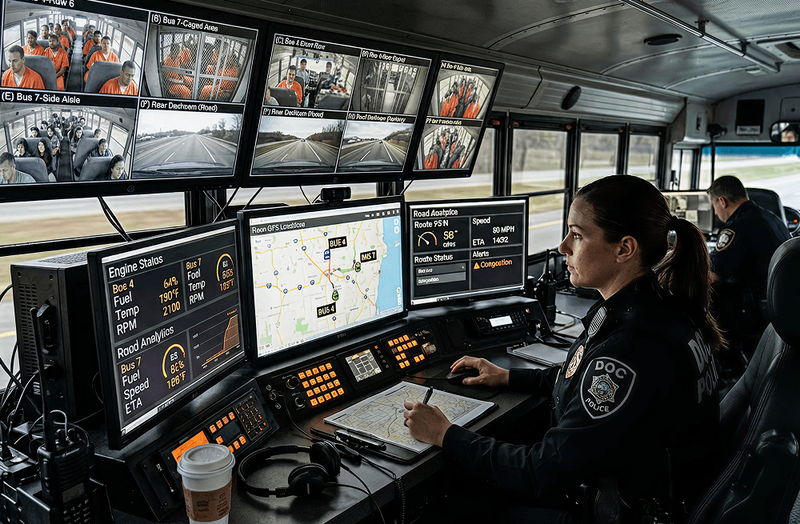
EYERIDE.IO was built for operations where accountability cannot be compromised.
For correctional transport agencies, that means bringing together:
- live GPS tracking
- multi-camera video
- geofencing
- AI-powered safety alerts
- driver fatigue monitoring
- vehicle diagnostics
- dispatch visibility
- incident playback
into one intuitive platform.
Not to create more work.
But to help officers, supervisors, and command staff make faster, better-informed decisions when they matter most.
Built for the Long Haul
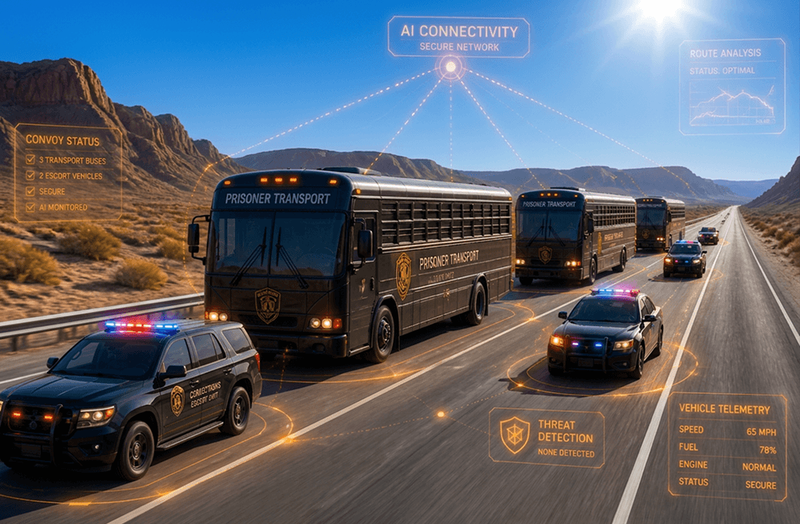
The best fleet management system isn't the one with the longest feature list.
It's the one your officers rely on every shift.
The one that provides answers instead of more questions.
The one that becomes part of the operation...
instead of another system to manage.
Final Thought
For correctional agencies, choosing a fleet management system isn't simply an IT decision.
It's a decision about safety.
Accountability.
Operational confidence.
And trust.
Because when officers have the right information at the right time...
they don't just respond more effectively.
They transport more safely, protect their agency more completely, and return every mission with confidence.
