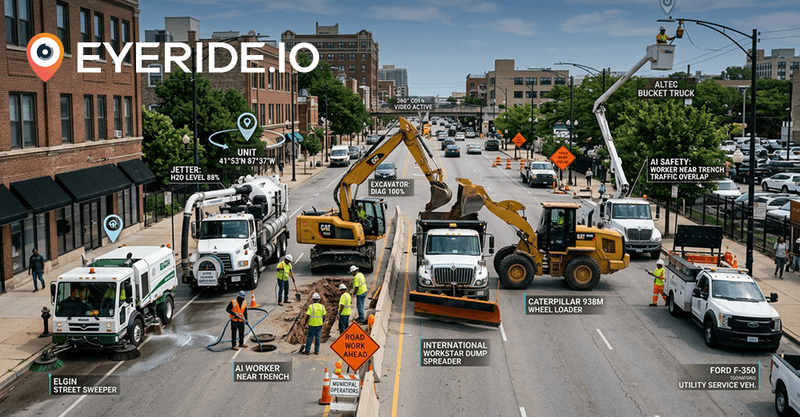
The Fleet Behind the City You Never Think About
From roads and sewer systems to streetlights and emergency repairs, public works depends on hundreds of vehicles and machines working without interruption.
Most people never think about the fleet behind their city.
Until something stops working.
A flooded street.
A damaged road.
A blocked sewer line.
A fallen tree.
A broken traffic signal.
Then suddenly, the vehicles and equipment responsible for fixing the problem become critical.
Public works fleets don't just move from point A to point B.
They keep entire communities running.
One Department. Dozens of Different Operations.
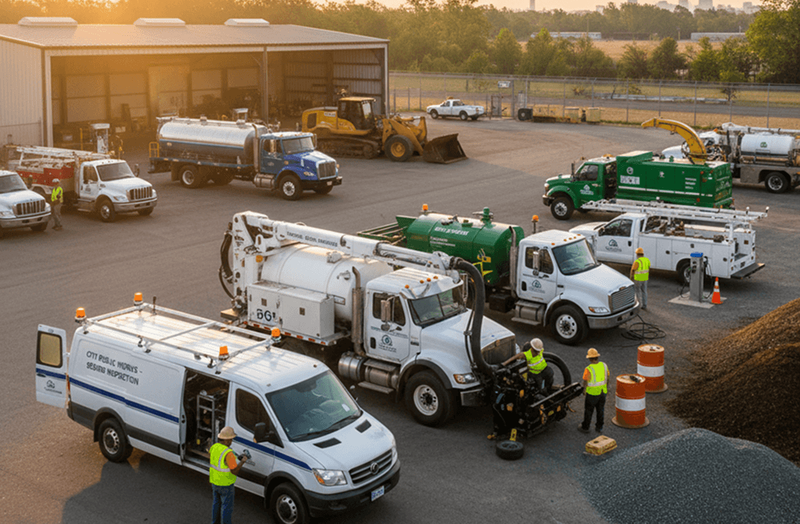
A public works fleet is rarely uniform.
One team may be maintaining underground infrastructure.
Another is repairing roads.
Another is trimming trees near power lines.
Another is responding to flooding.
Another is clearing snow or maintaining public spaces.
That means fleet management isn't just about knowing where vehicles are.
It means understanding what different assets are doing, how they're performing, and whether they're ready for the next job.
Because when one critical vehicle goes down...
The impact can spread quickly.
When Heavy Equipment Stops, The Work Stops
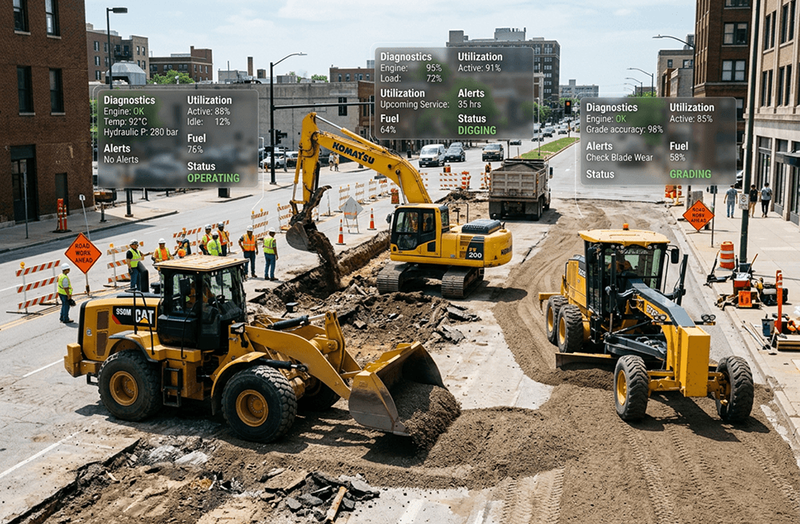
Heavy equipment doesn't have the luxury of unexpected downtime.
An excavator with an engine issue.
A wheel loader needing maintenance.
A motor grader operating inefficiently.
A utility truck that isn't available when a repair is needed.
These aren't minor inconveniences.
They can delay projects, increase labor costs, and leave critical infrastructure waiting.
That's why operational awareness has to extend beyond GPS.
Fleet teams need insight into:
- Engine health
- Equipment utilization
- Fuel consumption
- Maintenance needs
- Operating hours
- Fault alerts
- Asset location
The earlier an issue is identified, the more control teams have over what happens next.
The Work Often Happens Where Visibility Is Hardest
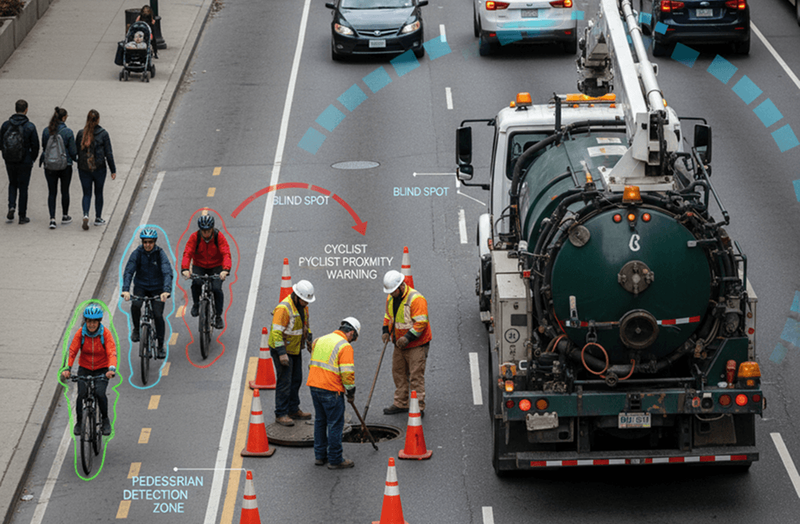
Public works vehicles don't operate in controlled environments.
They work:
Along busy roads.
Inside residential neighborhoods.
Near pedestrians.
Around cyclists.
At construction sites.
Beside moving traffic.
In tight spaces where large equipment has limited visibility.
A camera isn't just there to record what happened.
AI-powered cameras, blind-spot assistance, collision warnings, and 360-degree views can help operators understand what's happening around the vehicle before an incident occurs.
Because for crews working outside the cab...
Awareness can be just as important as reaction time.
A City Doesn't Wait for the Fleet to Catch Up
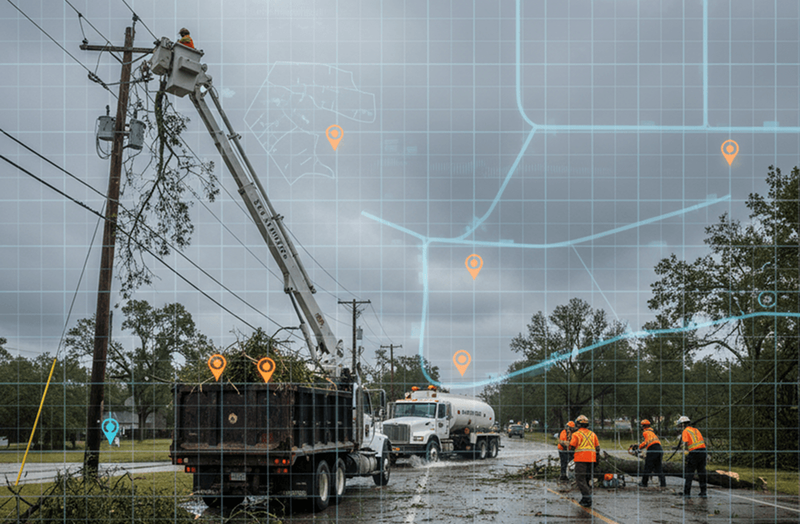
Public works isn't always predictable.
A storm can change the day's priorities.
A water main can fail.
A road can become unsafe.
Infrastructure can require immediate attention.
When that happens, teams need to know:
Where are the closest available assets?
Which vehicles are operational?
Who can respond?
What is happening on the ground?
The difference between having that information immediately and spending time calling around can directly affect response times.
Real-time fleet intelligence helps turn a scattered group of vehicles into a coordinated operation.
One Fleet. One Operational Picture.
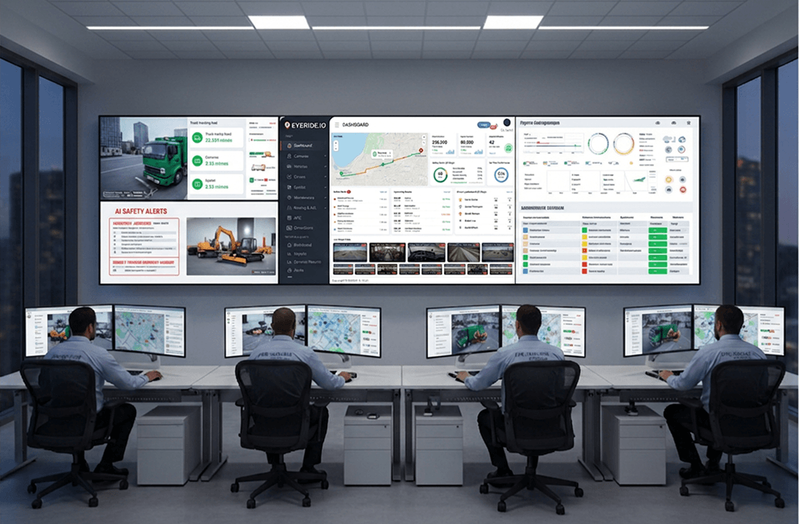
The challenge isn't always a lack of data.
Public works departments already generate enormous amounts of it.
The challenge is bringing the right information together.
Location.
Video.
Driver behavior.
Equipment diagnostics.
Fuel.
Maintenance.
Safety alerts.
Operational events.
When those systems live separately, teams spend time searching for answers.
When they're connected, teams can understand what is happening faster.
That difference matters when you're responsible for keeping an entire community moving.
Where EYERIDE Fits

EYERIDE.IO was built for fleets that need complete operational awareness and can't afford to be caught off guard.
For public works departments, that means connecting vehicles, equipment, safety systems, and operational data into one platform.
Giving teams a clearer view of:
- Live vehicle and equipment locations
- Multi-camera and 360° visibility
- AI-powered collision and pedestrian alerts
- Blind-spot assistance
- Driver behavior and safety events
- Engine and equipment diagnostics
- Fuel and asset monitoring
- Geofencing and operational zones
- Maintenance alerts
- Real-time operational events
All in one place.
Not to overwhelm teams with more information.
But to give them the intelligence they need before small issues turn into expensive downtime, safety incidents, or operational disruptions.
The Best Public Works Operations Are the Ones Nobody Notices

When public works does its job well...
Most people never think about it.
The roads are maintained.
The streets are clean.
The infrastructure works.
The problems get fixed.
That invisibility is often the best measure of success.
Behind it is an enormous operation of people, vehicles, and equipment working every day to prevent small problems from becoming larger ones.
The same principle applies to fleet technology.
When it works well...
It quietly helps keep everything else moving.
Final Thought

Public works fleets carry a responsibility most people never see.
They maintain the infrastructure communities depend on every day.
That responsibility requires more than tracking vehicles.
It requires knowing which assets are available, understanding how they're performing, protecting the people operating them, and identifying problems before they disrupt critical work.
Because when the fleet behind the city stays ahead of problems, the city can keep moving.
