The Most Dangerous Route Is the One You Drive Every Day
Waste collection isn't risky because of speed. It's risky because of repetition
Every route feels familiar.
The same neighborhoods.
The same streets.
The same collection schedule.
But no two collection days are ever exactly the same.
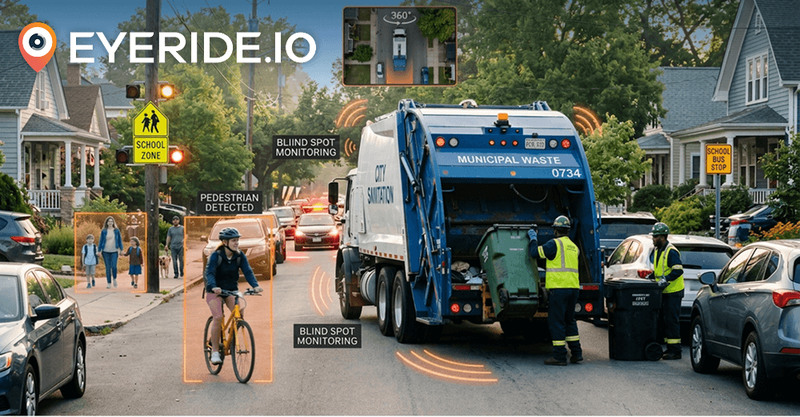
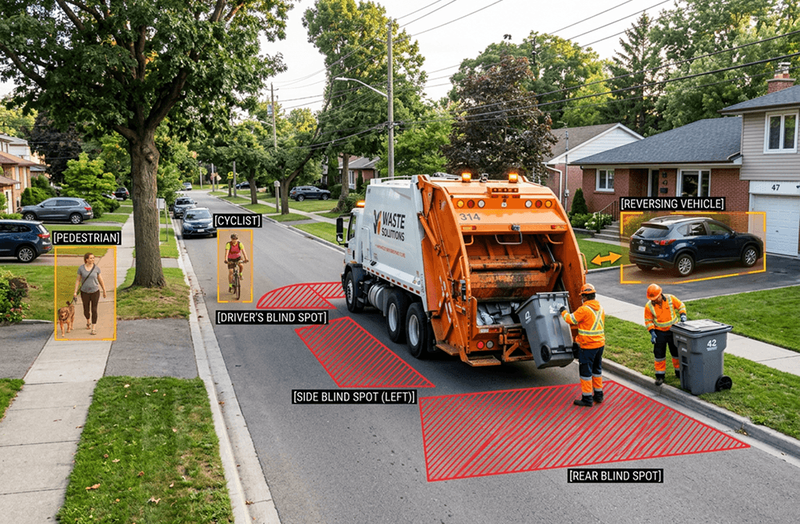
A child runs across the street.
A cyclist appears beside the truck.
A vehicle suddenly backs out of a driveway.
A pedestrian steps into a blind spot.
Waste collection doesn't happen in controlled environments.
It happens where people live.
And every stop creates a new situation.
Hundreds of Stops. Hundreds of Opportunities for Risk.
Unlike most commercial fleets, sanitation vehicles don't spend their day driving.
They spend their day stopping.
Again.
And again.
And again.
Each stop introduces new variables.
Traffic changes.
People move unpredictably.
Vehicles pass too closely.
Workers step in and out of traffic.
The challenge isn't one dangerous moment.
It's managing hundreds of small ones.
That's what makes waste collection one of the most demanding fleet operations on the road.
Visibility Around the Vehicle Matters More Than Speed
Sanitation vehicles operate in tight residential streets.
Alleyways.
Parking lots.
School zones.
Crowded neighborhoods.
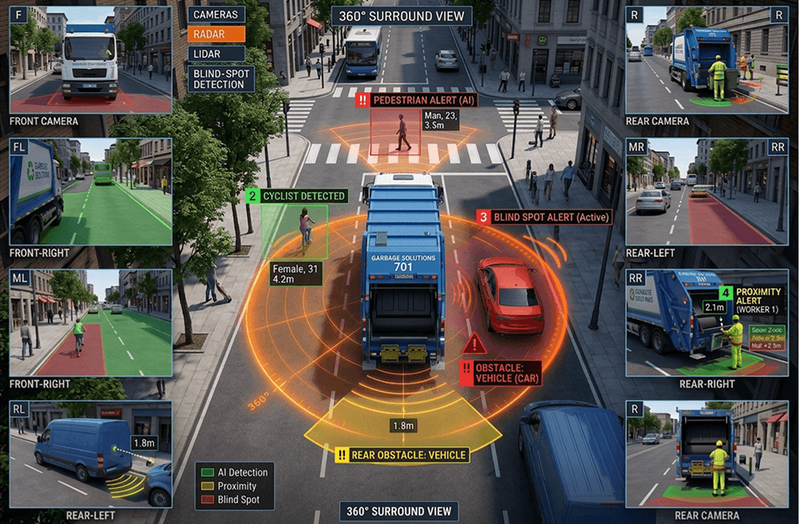
Drivers often can't rely on mirrors alone.
That's why complete situational awareness matters.
360° camera systems.
Blind-spot assistance.
Pedestrian detection.
Rear-view monitoring.
The goal isn't simply to record what happened.
It's to help prevent it from happening at all.
Protecting the Crew Outside the Cab
The driver isn't the only person at risk.
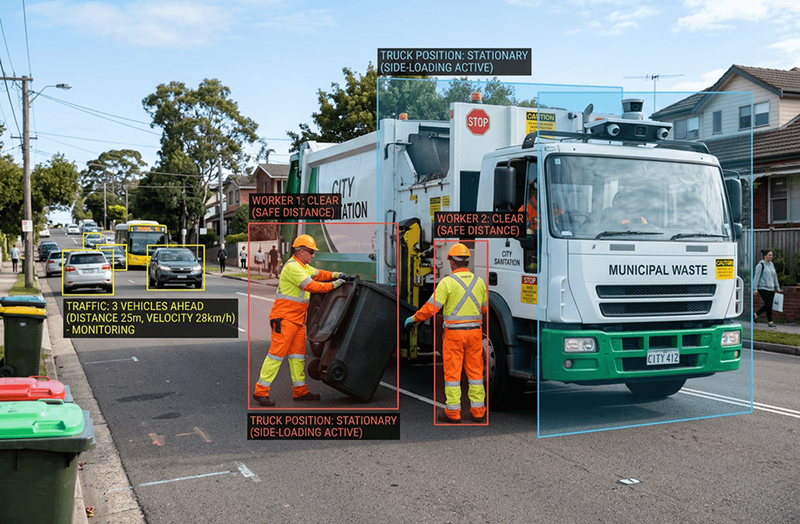
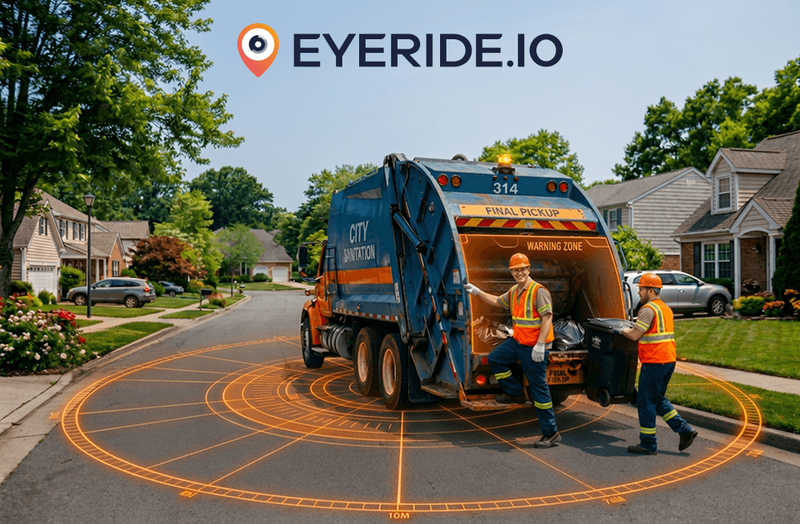
Collection crews work just inches from moving traffic.
They step on and off the truck dozens of times every hour.
They depend on clear communication and awareness.
Technology can provide another layer of protection by helping drivers identify hazards before they become incidents.
Because protecting the people outside the cab is just as important as protecting the person inside it.
Smarter Operations Go Beyond Safety
Waste collection is built on efficiency.
Every unnecessary detour.
Every minute of excessive idling.
Every unexpected breakdown.
Every missed pickup.
Adds cost across the operation.
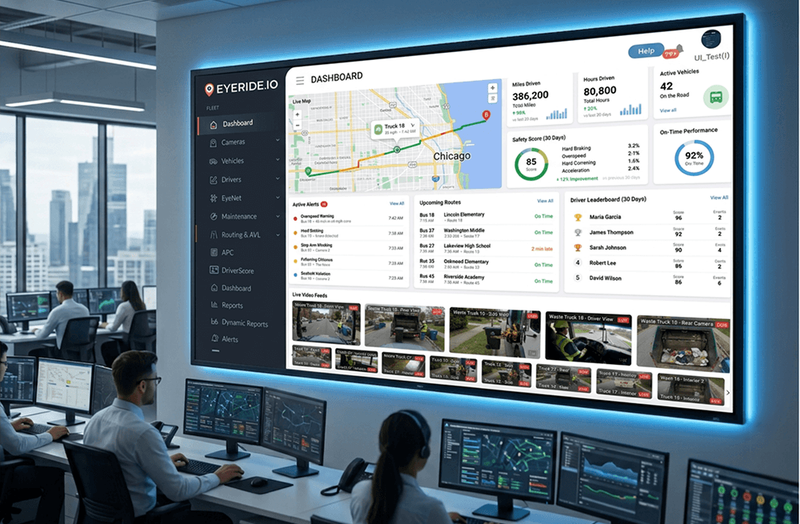
Operational visibility helps managers understand more than vehicle location.
It provides insight into:
- Route performance
- Idle time
- Fuel consumption
- Engine diagnostics
- Maintenance needs
- Driver behavior
- Collection efficiency
Small improvements across hundreds of routes quickly become significant savings.
Where EYERIDE Fits
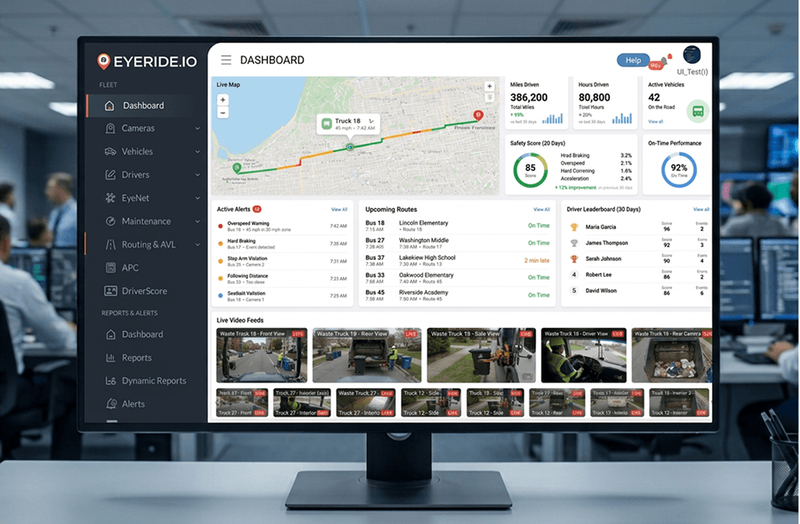
EYERIDE.IO was built for fleets that operate where visibility, safety, and efficiency matter every minute of the day.
For waste management fleets, that means connecting every layer of operational intelligence into one easy-to-use platform.
Including:
- 360° multi-camera visibility
- AI pedestrian and cyclist detection
- Blind-spot assistance
- Live GPS tracking
- Driver behavior insights
- Engine diagnostics
- Predictive maintenance alerts
- Fuel monitoring
- Route analytics
- Real-time safety notifications
Not to overwhelm operations.
But to help municipalities and private waste operators reduce incidents, improve efficiency, and maintain complete operational awareness throughout every route.
Better Routes Begin With Better Information
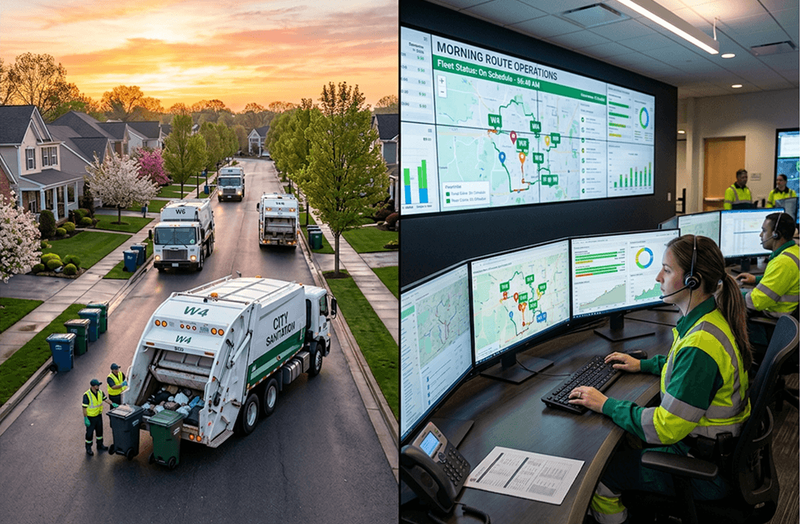
The best waste collection operations don't simply complete routes.
They continuously improve them.
By understanding where delays occur.
Where safety risks increase.
Where maintenance should happen before failures.
And where crews need support.
Visibility doesn't just help solve today's problems.
It helps prevent tomorrow's.
Final Thought
Waste collection is one of the most repetitive jobs in transportation.
But repetition should never lead to complacency.
Every stop is different.
Every neighborhood presents new challenges.
And every shift is another opportunity to protect drivers, crews, and the communities they serve.
Because the safest waste management operations aren't the ones that react fastest.
They're the ones that see risks before they become incidents.
