Date: 2026-09-30 Author: Emerson Acero
The Next Generation of Environmental Services Will Be Built on Better Intelligence
Municipal operations are changing. The future isn't just about moving more waste, maintaining more vehicles, or doing more with less. It's about knowing more, sooner.
The future of environmental services isn't happening in one place.
It's happening on collection routes.
At transfer stations.
Inside recycling facilities.
On municipal roads.
In fleet yards.
And behind the wheel of every vehicle responsible for keeping communities moving.
The industry is entering a period where doing the work is no longer enough.
Operators are being asked to improve safety, control costs, increase efficiency, maintain aging fleets, meet sustainability goals, and deliver better service to the communities they serve.
That requires something more than additional equipment.
It requires better information.
The Modern Municipal Fleet Is More Than a Collection of Trucks
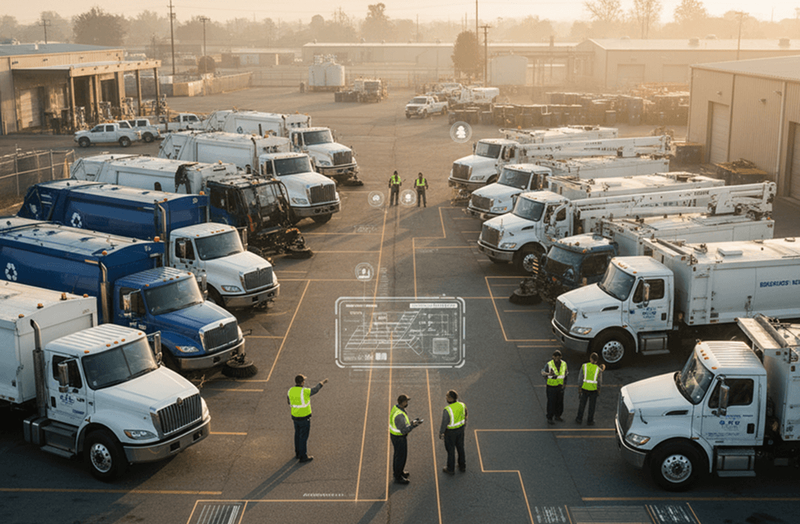
A municipal environmental fleet can include dozens or hundreds of vehicles performing completely different jobs.
A refuse truck may spend an entire day making hundreds of stops.
A recycling vehicle may follow a completely different route.
A street sweeper operates around traffic and pedestrians.
A utility vehicle may respond to an unexpected infrastructure issue.
A maintenance truck may be dispatched when another vehicle goes down.
Different missions.
Different risks.
Different operating conditions.
But they all contribute to the same municipal operation.
The challenge is understanding what's happening across all of them at once.
The Biggest Problems Usually Start Small
A minor driving event.
A vehicle idling longer than it should.
A maintenance issue that hasn't become a breakdown yet.
A driver showing early signs of fatigue.
A route that consistently creates unnecessary delays.
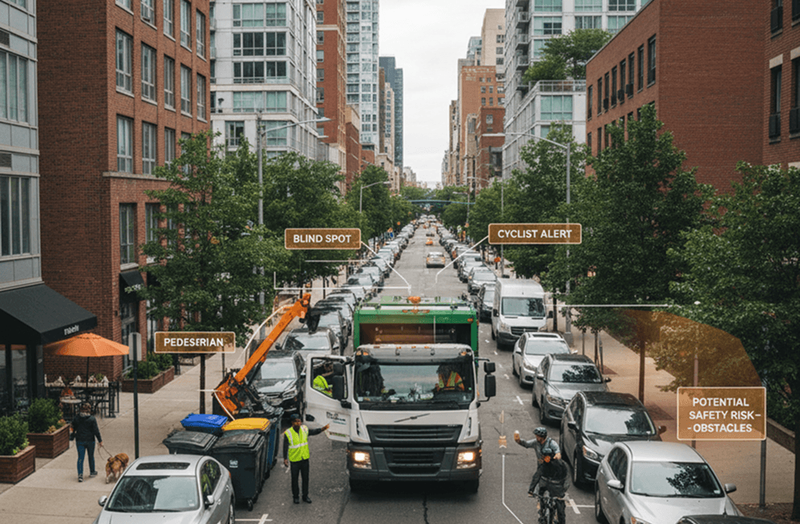
A blind spot that becomes dangerous when conditions change.
None of these necessarily look like major problems when they happen.
That's what makes them dangerous operationally.
The opportunity isn't simply to respond faster after something happens.
It's to recognize patterns early enough to prevent small issues from becoming expensive ones.
Safety Is Becoming More Proactive
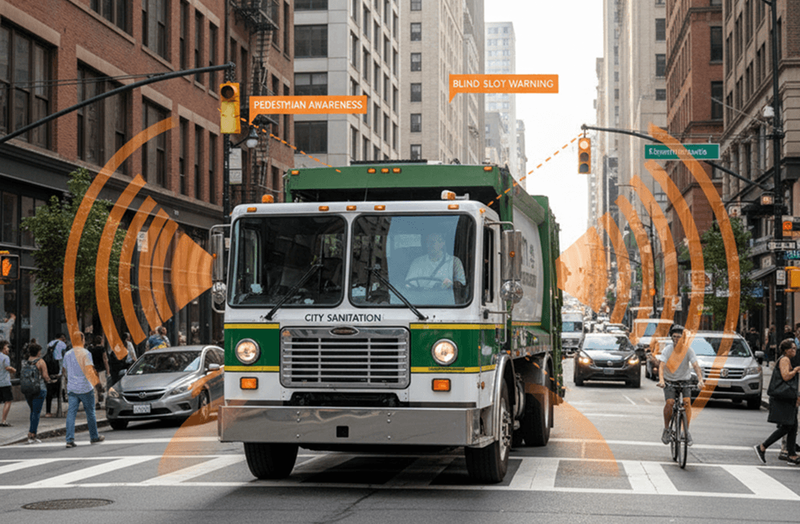
Environmental service vehicles operate in some of the most unpredictable environments a fleet can face.
Traffic.
Pedestrians.
Cyclists.
Narrow streets.
Residential neighborhoods.
Construction zones.
Changing weather.
Constant stopping and starting.
For years, safety programs have focused heavily on what happened after an incident.
The next generation of fleet technology is shifting that mindset.
Instead of simply documenting what happened, intelligent systems can help identify risk while the operation is still happening.
That changes the role of technology.
It becomes less about recording the past and more about helping teams manage the present.
Efficiency Is About More Than Fuel
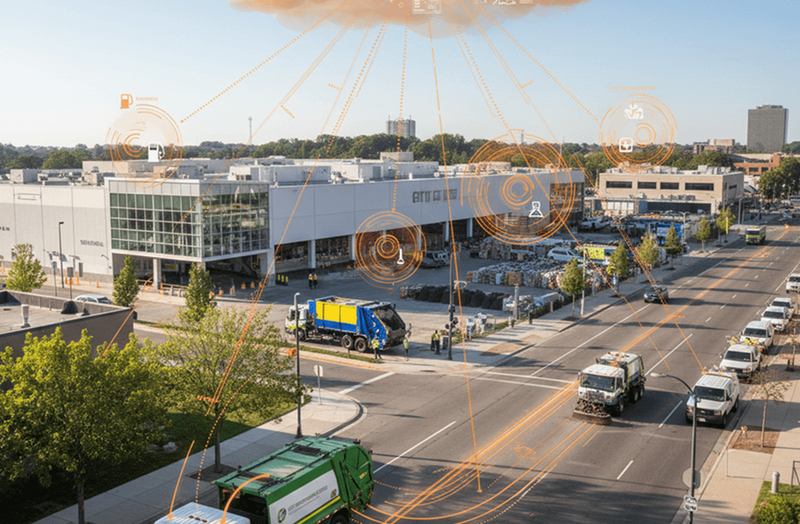
Efficiency doesn't always come from driving faster.
Sometimes it comes from knowing where time is being lost.
Where fuel is being consumed unnecessarily.
Which vehicles are spending too much time idling.
Which assets are being underutilized.
Which maintenance issues are beginning to repeat.
Which routes consistently create operational friction.
When that information is connected, fleet managers can start looking beyond individual events.
They can see patterns.
And patterns create opportunities.
The Municipal Vision Is Becoming More Connected
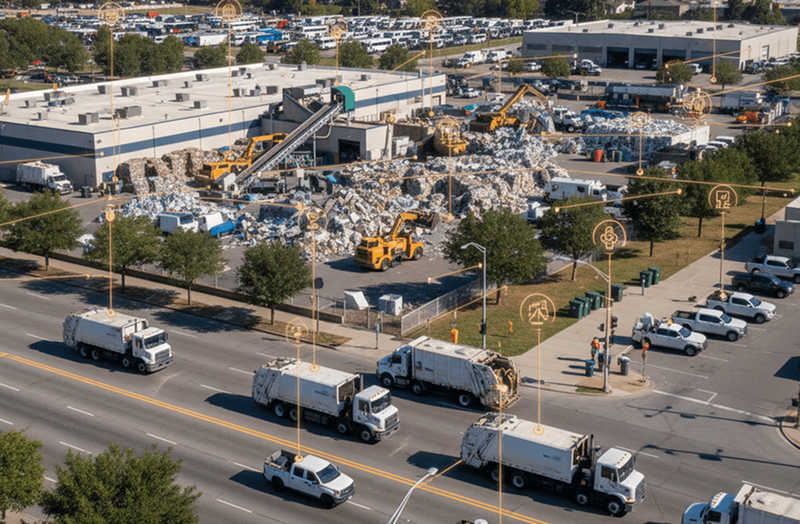
This is where the idea of a municipal operational picture becomes important.
The future isn't about giving every department another disconnected system.
It's about connecting the information that already exists.
Vehicle location.
Video.
Driver behavior.
Safety events.
Engine health.
Maintenance.
Fuel.
Routes.
Geofencing.
Equipment activity.
When these signals come together, municipalities gain something more valuable than another report.
They gain context.
And context allows decisions to happen earlier.
Where EYERIDE Fits
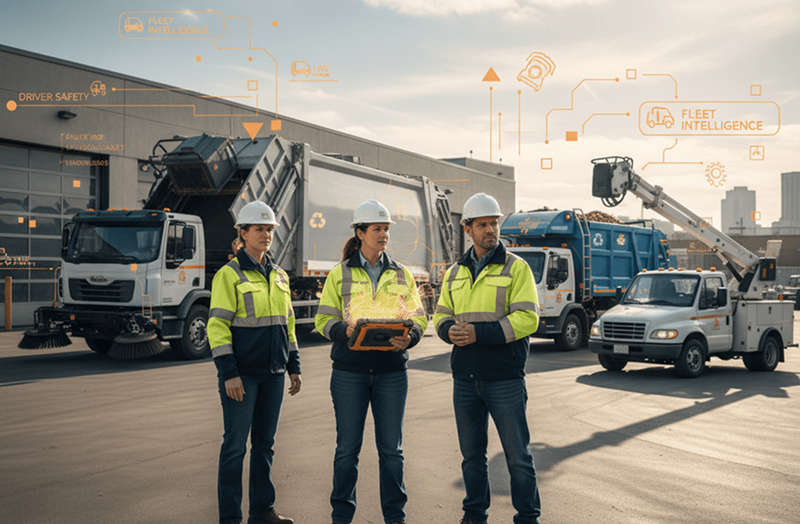
EYERIDE.IO was built around this shift.
Not simply to put cameras on vehicles.
Not simply to track where a truck is.
But to bring together the information teams need to understand what is happening across their operation.
Live GPS.
Multi-camera video.
AI-powered safety alerts.
Driver behavior.
Fatigue monitoring.
Geofencing.
Engine diagnostics.
Fuel and vehicle intelligence.
Maintenance alerts.
And real-time operational events.
The goal is simple:
Give municipal and environmental service teams the information they need before small issues become big operational problems.
Because the future of fleet management isn't about collecting more data.
It's about making better use of the data you already have.
The Future of Environmental Services Is Already Moving
That conversation is happening now across the waste and resource management industry.
And that's part of what makes gatherings like RCon 2026 in St. Louis important.
RCon brings together waste and resource management professionals around education, innovation, collaboration, and the challenges shaping the industry's next chapter. This year's program also includes a strong emphasis on safety, technology, resource management, and practical solutions.
For municipalities and environmental service operators, the question isn't whether technology will become part of the future.
It already is.
The more important question is how intelligently that technology can be used.
Final Thought
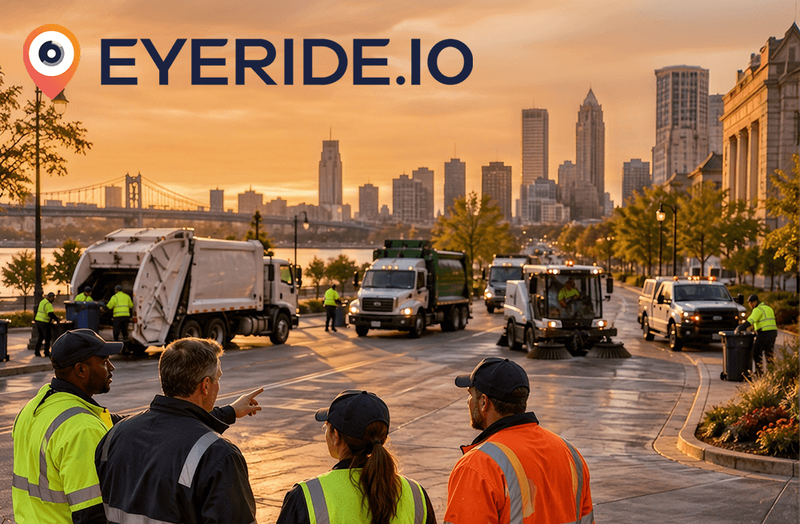
The future of environmental services won't be defined by how much technology a fleet owns.
It will be defined by how much better that technology helps people understand their operation.
Because when municipalities can see what's happening, understand why it's happening, and act before problems escalate...
They don't just manage a fleet better.
They build a smarter, safer, and more resilient community.
