The Officer Safety Paradox
How to Stop Fatigue Without Compromising Privacy
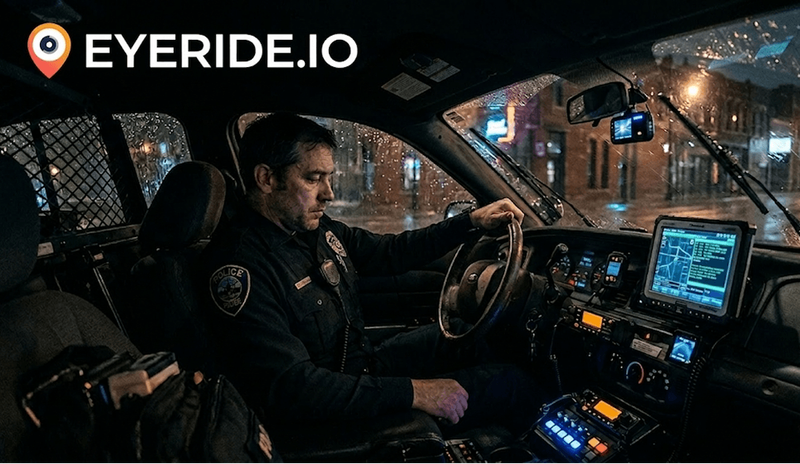
It’s 3:15 AM on a rainy Tuesday.
You’ve been on patrol for nearly 12 hours.
The road is quiet. The windshield wipers move in rhythm.
Your eyelids get heavier – you blink!
For a split second, the world goes dark.
You just experienced a micro-sleep while driving.
This isn’t just a tough shift.
For law enforcement officers, fatigue is one of the most dangerous threats in the job.
And yet, the technology meant to prevent it often creates another problem:
Privacy.
The Officer Safety Paradox
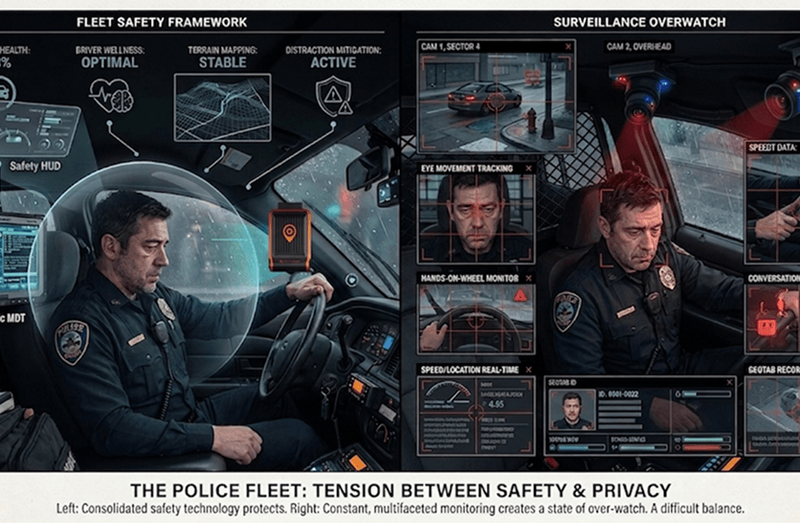
Officers want protection from fatigue.
But they don’t want someone watching or micro managing them for an entire shift.
Many fatigue monitoring systems rely on internal cameras streaming video to supervisors.
To officers, that can feel less like safety…
and more like surveillance.
This creates a real dilemma:
How do you protect officers without turning the cruiser into a surveillance box?
EYERIDE.IO has a seamless solution .
EYERIDE’s Design Principles
The Hidden Cost of Fatigue
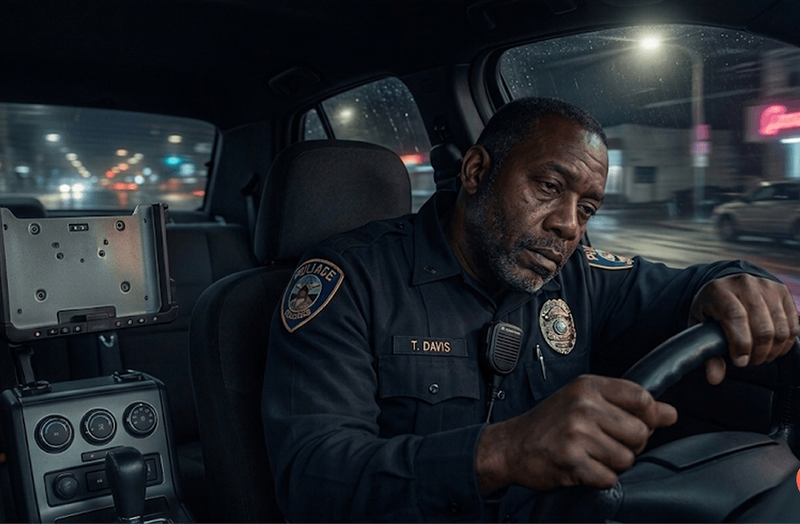
Fatigue doesn’t just make a shift harder.
It makes it dangerous.
Research shows:
- 17 hours awake = impairment similar to 0.05% BAC
- 24 hours awake = impairment similar to 0.10% BAC
That’s over the legal driving limit.
For officers behind the wheel, fatigue can mean:
- slower reaction time
- reduced decision-making ability
higher risk of high-speed collisions
The Problem With “Always-On” Cameras
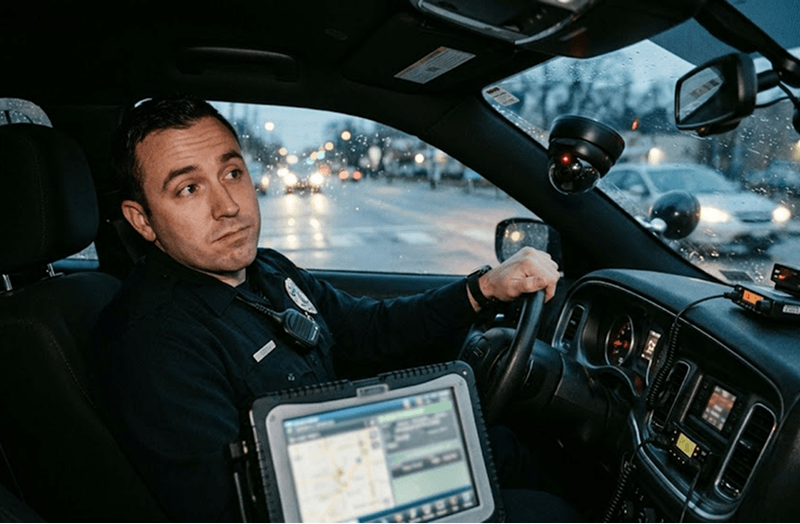
Departments have tried to solve this problem with interior camera monitoring.
But this approach often backfires.
When officers feel constantly watched:
- trust erodes
- morale drops
- technology gets disabled or ignored
Safety tools only work if officers actually trust them.
Separating Privacy from Protection
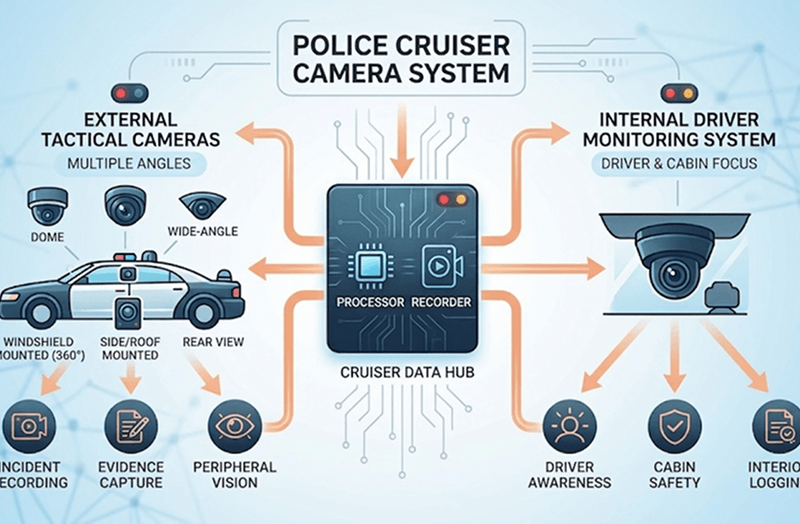
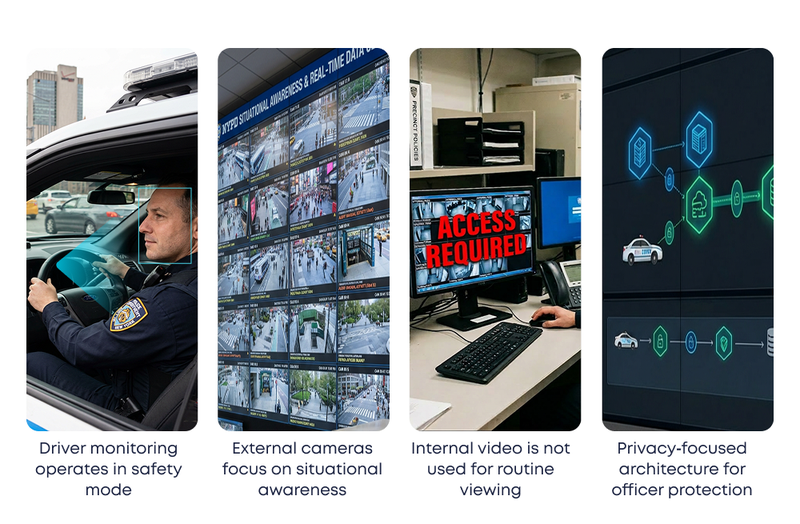
The breakthrough in modern video telematics is architectural separation.
Instead of one camera system doing everything, the system splits into two paths.
External Cameras
These cameras protect officers from threats on the street.
They provide:
- live streaming to dispatch
- evidence recording
- situational awareness
Internal DMS Cameras
These serve a completely different purpose , the system activates when AI detects risky behavior or fatigue signals
- They are not constantly livestreamed.
- No supervisor is watching or micromanaging
How AI Detects Fatigue
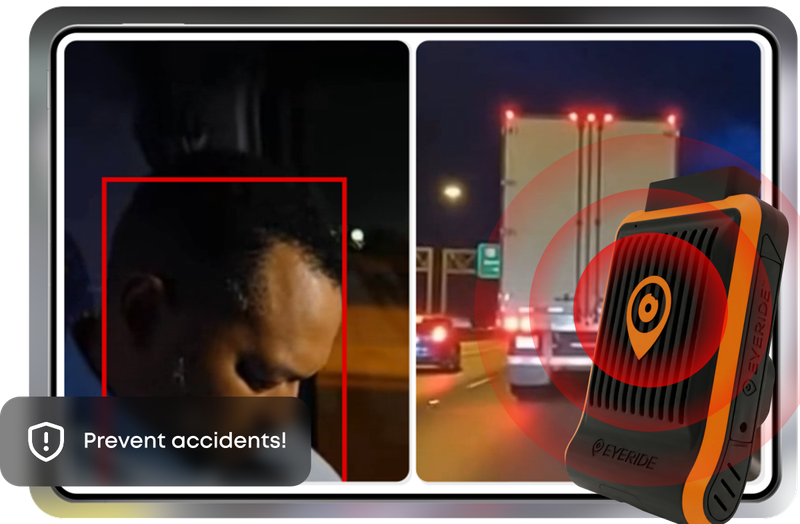
Driver Monitoring Systems detect fatigue before officers realize it themselves.
Using infrared sensors and AI, the system tracks:
- Eyelid closure (PERCLOS)
- Yawning frequency
- Gaze deviation
If fatigue risk appears, the system triggers an in-cab alert.
Think of it as a digital partner in the passenger seat.
A quick signal that it may be time to:
- pull over
- Reset
- grab coffee
- call backup
From Surveillance to Driver Coaching
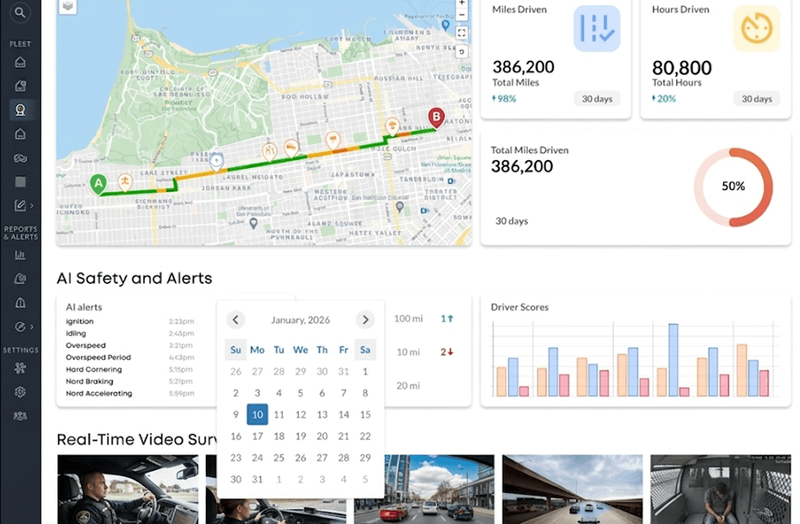
Instead of reviewing endless hours of footage, modern systems generate Driver Scores
These scores reveal long-term safety patterns:
- fatigue trends
- driving behavior
- risk indicators
This turns monitoring into coaching.
Departments can identify:
- when officers hit fatigue limits
- which shifts create the most exhaustion
- how to improve rotation
The goal isn’t punishment.
It’s prevention.
Protecting Officers from Two Threats

Officers face danger from two directions.
The street
- suspects
- Incidents
- Unpredictable situations.
The seat
- Fatigue
- Long shifts
- Physical exhaustion.
With the right technology, officers gain 360-degree protection.
Why “Good Enough” Technology Isn’t Enough
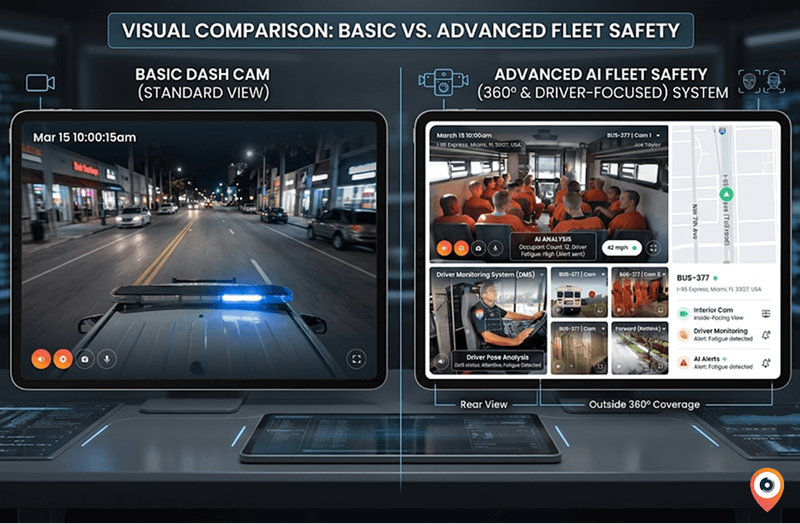
Many departments settle for basic dash cams to avoid privacy concerns.
But basic cameras only record after something goes wrong.
They don’t detect fatigue.
They don’t warn about micro-sleep.
They don’t intervene before a crash.
The right technology removes the spy factor while keeping the safety net.
Final Thought

Officers shouldn’t have to choose between privacy and protection.
The technology now exists to provide both.
By separating tactical surveillance from wellness monitoring, departments can build systems officers actually trust.
Because protecting those who protect us
means protecting them from every threat — including fatigue.
