The Road Is Not the Risk. Uncertainty Is.
Fleet risk is often described as something external.
Traffic. Weather. Long routes. Tight schedules.
But inside fleet operations, risk usually feels very different. It shows up as uncertainty. The kind that slows decisions and creates tension long before anything actually goes wrong.
Uncertainty about what happened during a near miss.
Uncertainty about whether a behavior is isolated or becoming a pattern.
Uncertainty about what was happening around the vehicle, not just in front of it.
These gaps matter because fleet decisions rarely wait for perfect information.
Why uncertainty is so expensive
When information is incomplete, teams fill the gaps with assumptions. That is not a failure of leadership. It is a reality of fast moving operations.
But assumptions carry a cost.
They extend investigations.
They complicate insurance conversations.
They strain trust between drivers and managers.
Over time, uncertainty becomes operational friction.

Visibility changes the conversation
Fleet visibility is often discussed as tracking. Location. Speed. Routes.
In practice, visibility is about context.
Understanding what surrounded a vehicle during a critical moment. Seeing how conditions, traffic, and behavior intersected. Being able to review events clearly instead of reconstructing them from memory.
When that context exists, decisions become calmer. Reviews become fairer. Conversations become shorter and more productive.
Where technology actually helps
The right fleet technology does not try to control behavior. It clarifies reality.
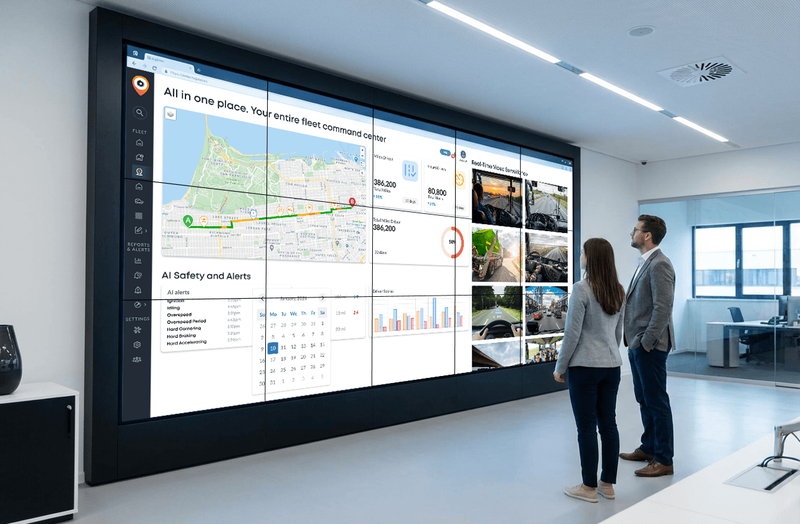
Video, including side and lateral perspectives, fills in the blind spots that data alone cannot explain. AI driven alerts bring attention to risk early, before it escalates. A unified fleet management system keeps information accessible instead of fragmented.
None of this removes responsibility. It supports it.
The real outcome
Safer fleets are not built by reacting faster.
They are built by seeing sooner.
Reducing uncertainty does not eliminate risk, but it makes risk manageable. That is the difference between reactive operations and controlled ones.
