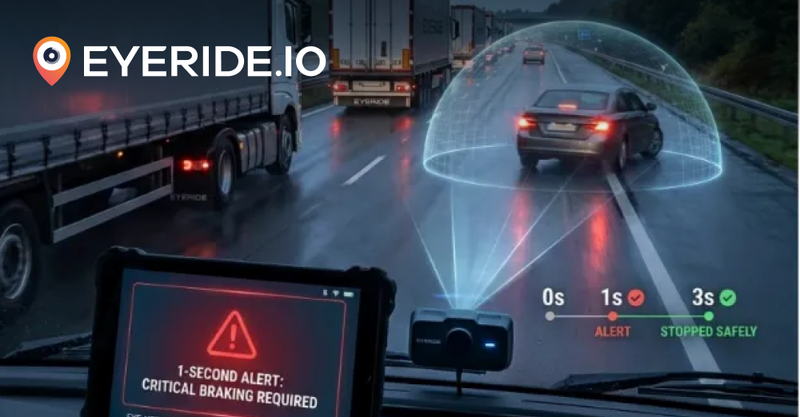
The Critical 3 Seconds: How Eyeride's 1-Second Alerts Prevent Deadly Accidents
Imagine this: Your driver is hauling a full load down the interstate. Traffic ahead slows suddenly. Your driver glances at their phone for just a moment: maybe checking a text, maybe adjusting navigation.In that split second, everything changes. The brake lights ahead turn red. The gap closes. Three seconds remain before impact.
What happens in those three seconds determines everything. A totaled vehicle. A lawsuit. A life changing injury: or worse. But here's what most fleet managers don't realize: nearly every collision that happens in those final moments was technically preventable. The difference between disaster and a close call often comes down to a single second of warning.
This is the reality Eyeride was built to address. Not to record what went wrong after the fact, but to stop it from happening in the first place.
The Science Behind the 3-Second Window
Traffic safety researchers have long understood that the vast majority of vehicle collisions occur within a predictable window. Studies consistently show that drivers have, on average, about three seconds of reaction time before an impending collision. That's not a lot of time: but it's enough. Enough to brake. Enough to swerve. Enough to save a life.
The problem? Human perception isn't perfect. Fatigue, distraction, blind spots, and cognitive overload all conspire to steal precious fractions of that window. By the time a distracted driver recognizes danger, they may have less than a second to respond. And at highway speeds, a single second translates to roughly 88 feet of travel distance.
This is where technology must step in: not to replace human judgment, but to extend it. To give drivers back the time they've lost to distraction or fatigue. To compress the gap between danger and awareness.

Legacy Systems: Recording Disasters Instead of Preventing Them
Here's a hard truth most fleet technology vendors won't tell you: the majority of dash cams and event recorders on the market today are designed for one purpose: liability protection after an accident has already happened. Don't get us wrong. Having video evidence matters. It can protect your company in court, exonerate drivers from false claims, and provide valuable training material. But let's be honest about what these systems actually do: they watch accidents happen. They document the damage. They're reactive, not proactive.
Think about it. A traditional event-triggered camera starts recording when it detects sudden braking, a collision, or a dramatic swerve. By that point, the damage is done. You're not preventing anything: you're just capturing evidence of failure.
This approach treats accidents as inevitable. It assumes your drivers will make mistakes and your job is simply to manage the fallout. That's not fleet safety. That's fleet damage control.
The Eyeride Difference: Proactive AI That Saves Lives
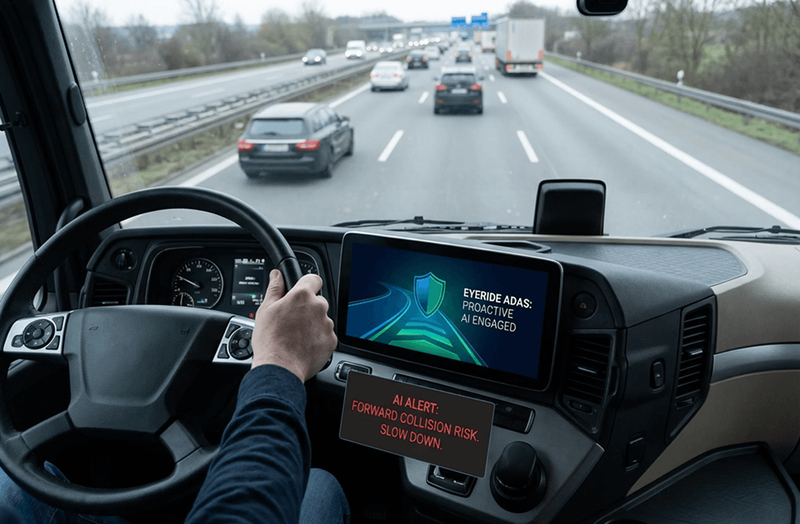
Eyeride's Advanced Driver Assistance System (ADAS) operates on a fundamentally different philosophy. Instead of waiting for something to go wrong, our AI-powered platform monitors road conditions, driver behavior, and potential hazards in real time: and alerts drivers before danger becomes disaster.
Our system delivers sub-second detection of critical events like forward collision risks, lane departures, and unsafe following distances. When the AI identifies an imminent threat, it triggers an instantin-cab alert: giving your driver back that crucial second they need to react.
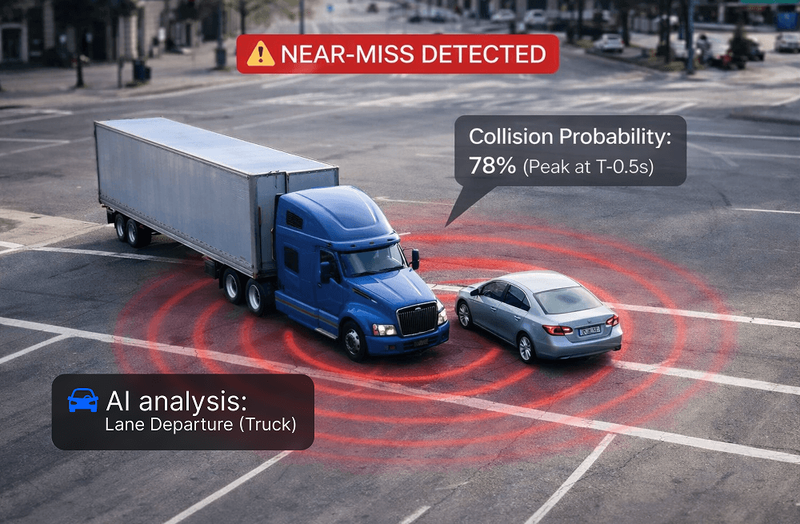
Let's break down what that means in practice:
Forward Collision Warning: When your vehicle approaches another too quickly, Eyeride's AI calculates closing speed, distance, and trajectory. If a collision becomes likely, the system issues an immediate audio and visual alert: typically one to two seconds before impact would occur.
Lane Departure Alerts: Drowsy or distracted drivers often drift without realizing it. Our system detects unintentional lane changes and alerts the driver instantly, preventing sideswipes and run-off-road incidents.
Headway Monitoring: Following too closely is one of the leading causes of rear-end collisions. Eyeride continuously monitors safe following distance and warns drivers when they're tailgating: beforethey're forced into emergency braking.
These aren't theoretical features. They're deployed across thousands of vehicles right now, actively preventing accidents every single day.
A Real-World Scenario: How One Second Changes Everything
Let's walk through a concrete example. Picture one of your drivers approaching a red light in moderate traffic. They're running slightly behind schedule, mentally calculating their next stop. Their eyes drift to the dispatch tablet mounted on the dash: just for a moment.
Ahead, the vehicle in front brakes hard. A pedestrian has stepped into the crosswalk unexpectedly.
Without Eyeride: Your driver looks up too late. They slam the brakes, but momentum carries them forward. Impact. The collision happens at 25 mph: enough to cause significant vehicle damage, potential injuries, and certain liability exposure. The dash cam captures everything. Great for the insurance claim. Terrible for everyone involved.
With Eyeride: The AI detects the rapidly closing distance and calculates collision probability within milliseconds. One second before impact becomes unavoidable, a sharp audible alert sounds in the cab. Your driver looks up, registers the danger, and brakes hard. The vehicle stops with feet to spare. No collision. No injuries. No claim. Just a close call that becomes a coaching opportunity instead of a catastrophe.
That's the difference one second makes. That's the difference between watching accidents and preventing them.
The Business Case: Prevention Pays More Than Documentation
Let's talk numbers. The average commercial vehicle accident costs between $70,000 and $150,000 when you factor in vehicle damage, medical expenses, legal fees, increased insurance premiums, and lost productivity. Fatal accidents can exceed $10 million in total liability. Now consider what prevention is worth. Every accident that doesn't happen is money that stays in your operation. It's a driver who stays on the road instead of recovering from injury. It's an insurance renewal that doesn't spike. It's a lawsuit that never gets filed.
Fleet managers who've deployed Eyeride's AI-powered dash cam solutions report dramatic reductions in preventable incidents. We're not talking incremental improvements: we're talking about fundamentally changing the risk profile of your entire fleet.
Beyond the financial math, there's a moral dimension here that shouldn't be ignored. Every collision involves real people. Your drivers. Other motorists. Pedestrians. Their families. When you have the technology to prevent harm and choose not to deploy it, that's a decision you have to live with.
Real-Time Coaching: Building Safer Drivers Over Time
Prevention isn't just about alerts in the moment. It's about building a culture of safety that compounds over time.
Eyeride's platform doesn't just warn drivers: it tracks patterns, identifies risky behaviors, and enables targeted coaching interventions. When a driver consistently follows too closely or drifts lanes during late-night shifts, you'll know about it. More importantly, you can address it before it becomes a statistic.
Our fleet management system integrates real-time video, telematics, and AI-powered analytics into a single dashboard accessible from any device. You get complete visibility into driver behavior across your entire fleet: not after accidents happen, but while there's still time to prevent them.
Stop Watching Accidents. Start Preventing Them.
The technology to prevent collisions exists today. The question is whether you're going to use it.
Legacy systems will continue recording disasters for as long as fleet managers accept that accidents are inevitable. But they're not inevitable. Three seconds is enough time to stop a collision: if your drivers get the warning they need.
Eyeride gives them that warning. One second. One alert. One life saved.
Your fleet deserves more than a witness to disaster. It deserves a guardian that never blinks. Discover why leading fleets choose Eyeride and see the difference proactive AI makes.
